
Senior UI/UX Designer
From Energy Challenges to Product Opportunities
The Challenge
NRG was exploring how to create new value for homeowners through a Residential Home Advisory innovation sprint.
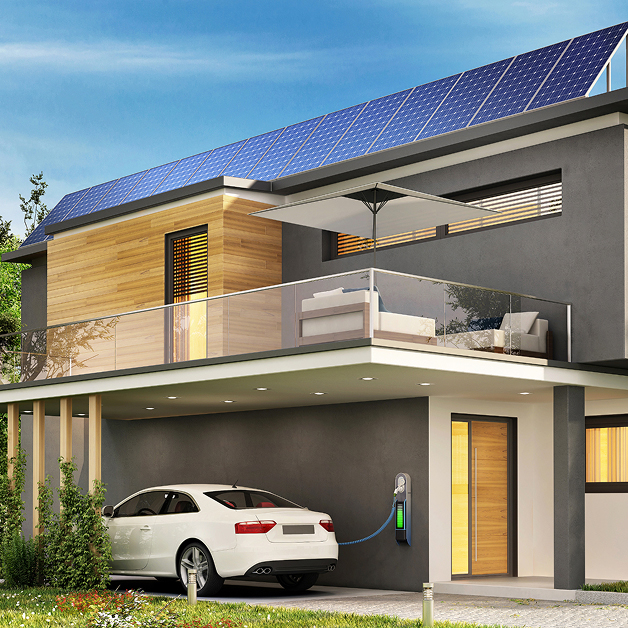
The opportunity space was complex. Homeowners were facing rising energy costs, power outages, new technologies, government incentives, and a growing need for trusted guidance around energy decisions.
A discovery process was needed to turn a broad market opportunity into validated product directions, customer journeys, and early concept screens.
The Approach
A structured discovery sprint was designed to move from problem exploration to concept creation.
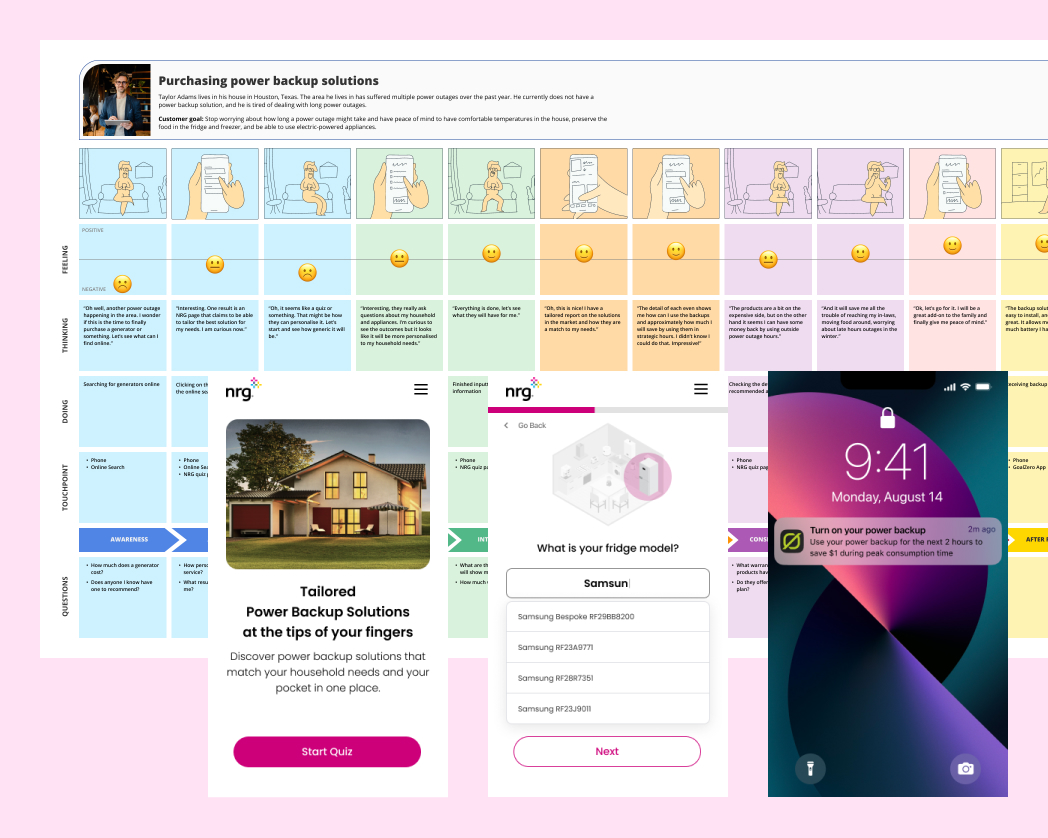
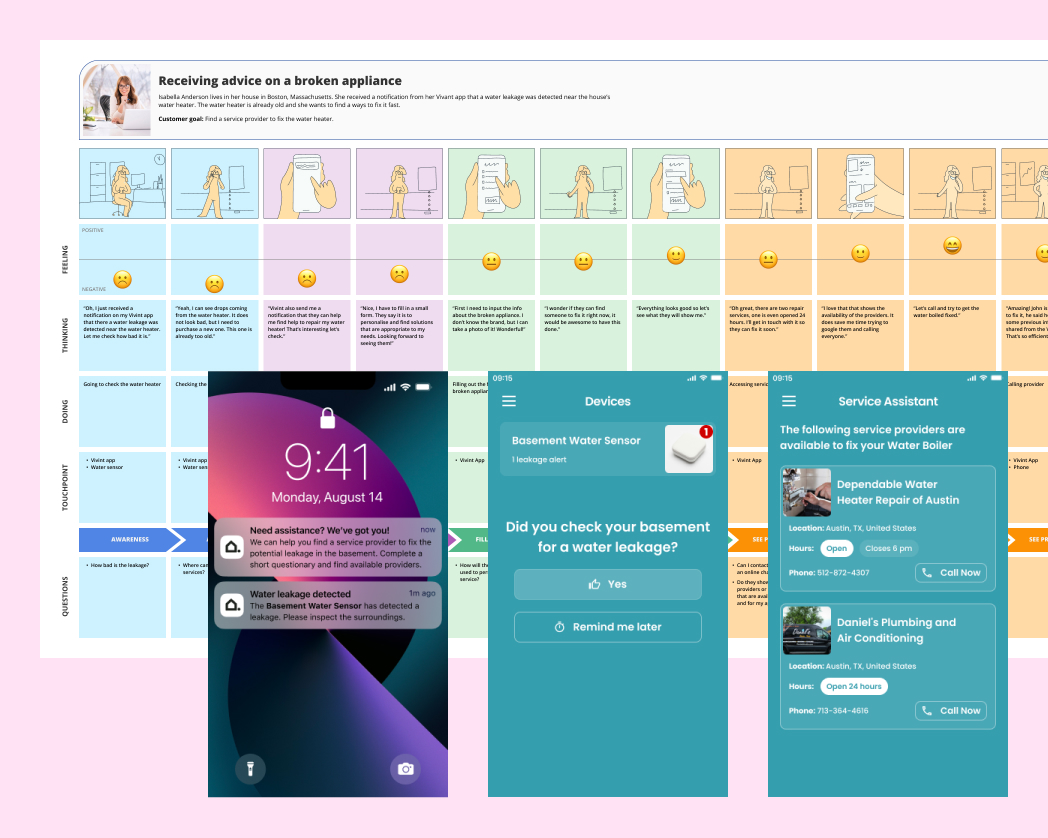
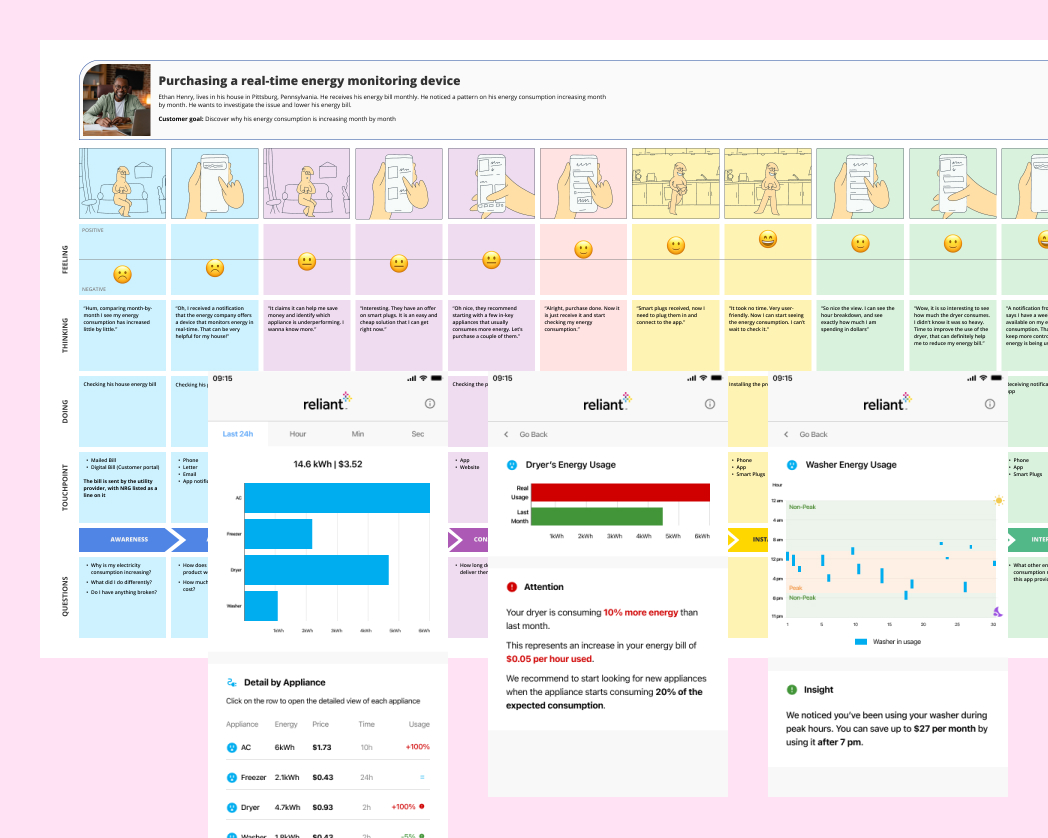
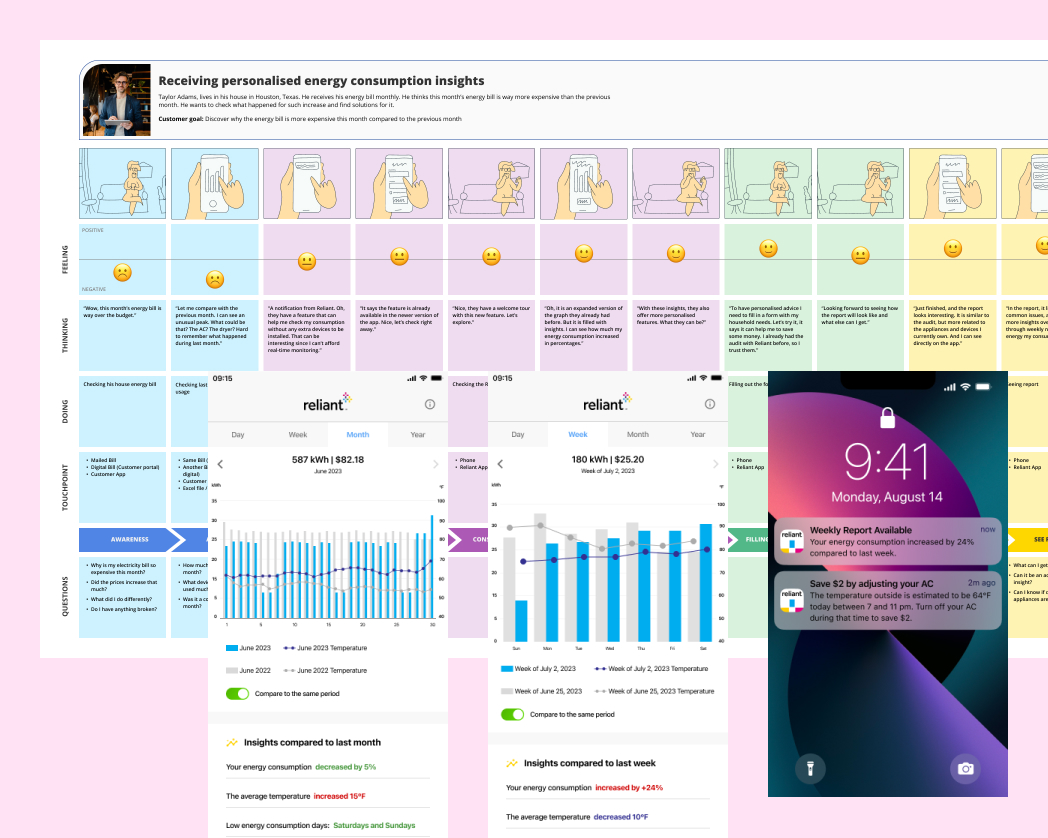
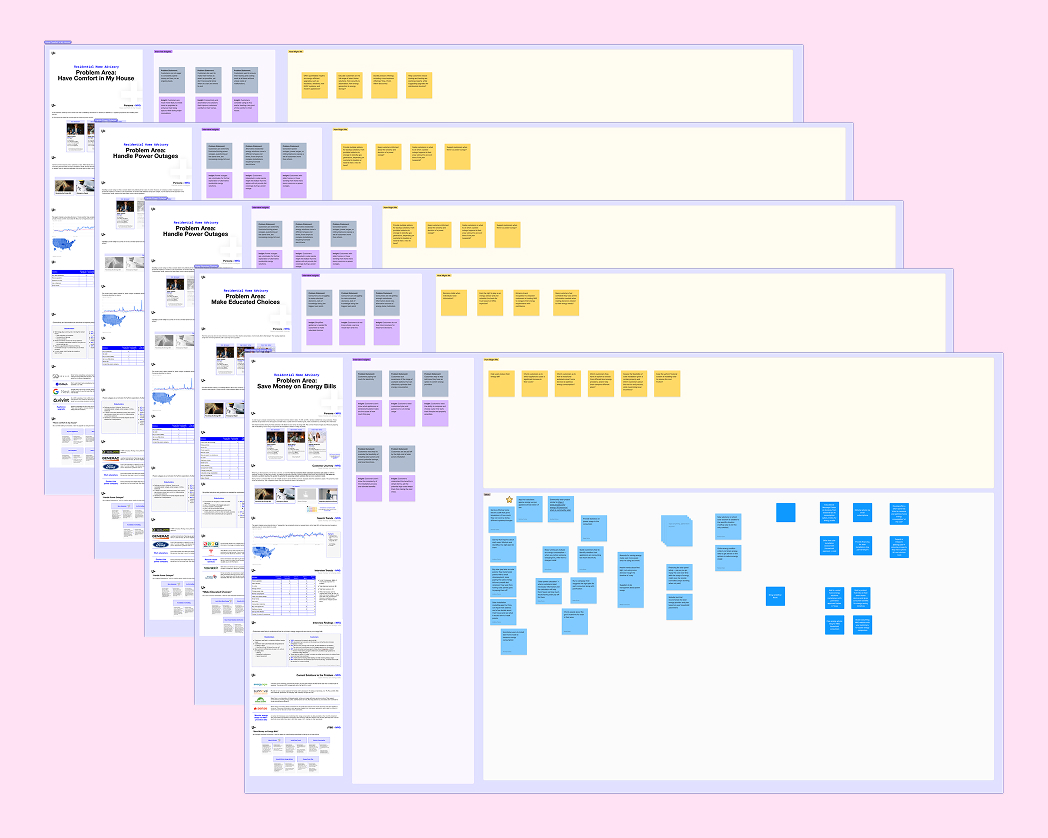
The work started with market research, NRG stakeholder interviews, customer interviews, search intent analysis, persona definition, and customer journey mapping. Five core problem areas were identified for further exploration, including saving on energy bills, home comfort, handling power outages, avoiding scams, and making educated choices.
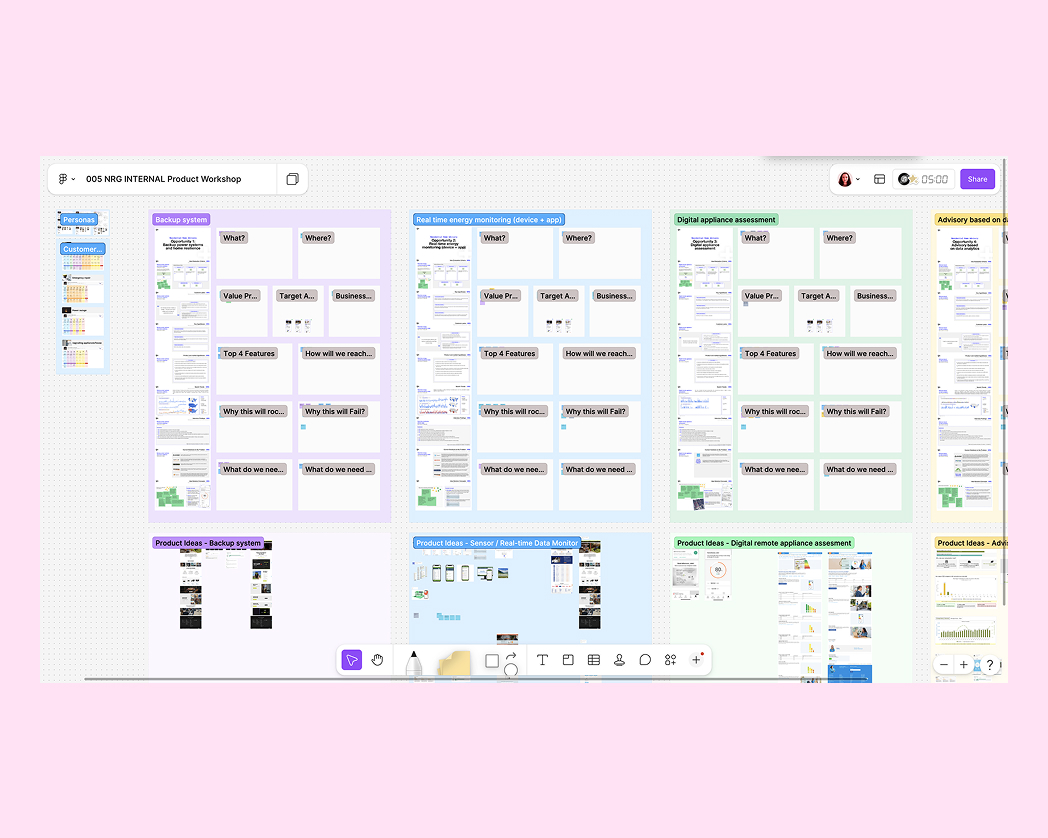
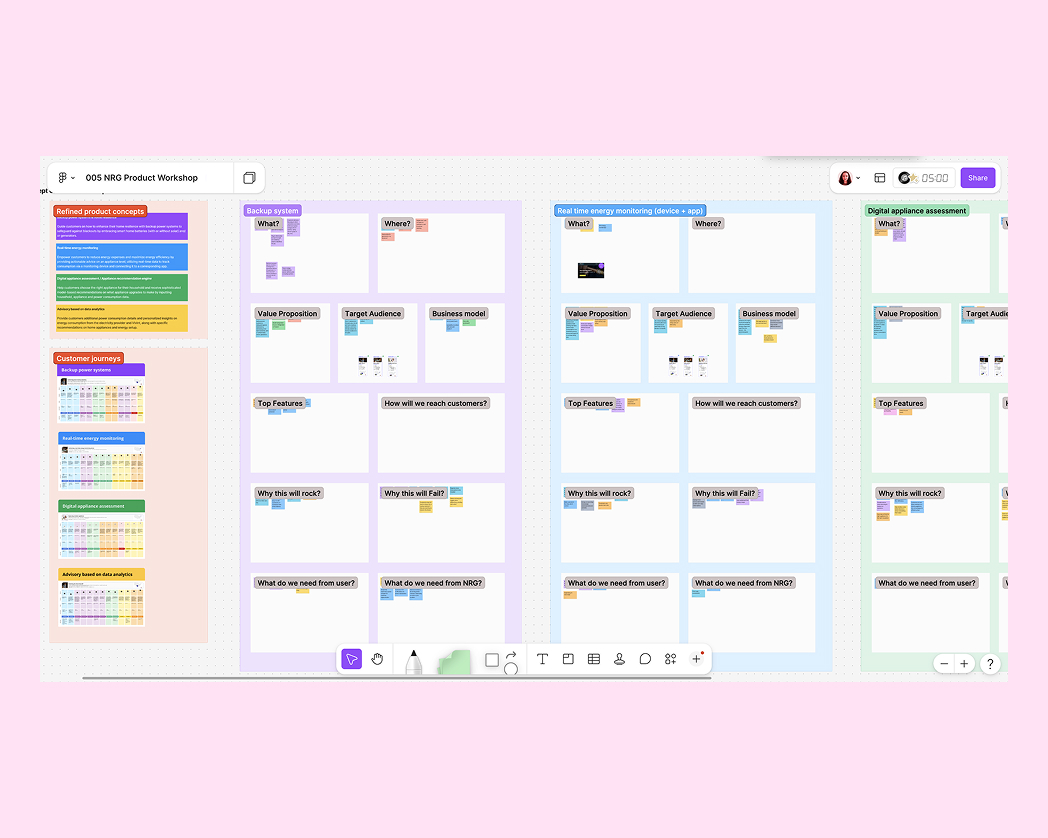
Product discovery workshops were designed and facilitated to align the NRG and U+ teams around opportunity areas, assumptions, and prioritization criteria.
Research efforts were led in collaboration with a UX Research partner. Personas, customer journeys, problem statements, interview plans, and early value propositions were created to support customer validation.
Key concept screens were designed to make the ideas tangible, support stakeholder conversations, and help test potential advisory services.
Close collaboration with Business Analysts, Product Development, and senior NRG stakeholders also supported stronger product evaluation and business modeling throughout the sprint.
Feedback
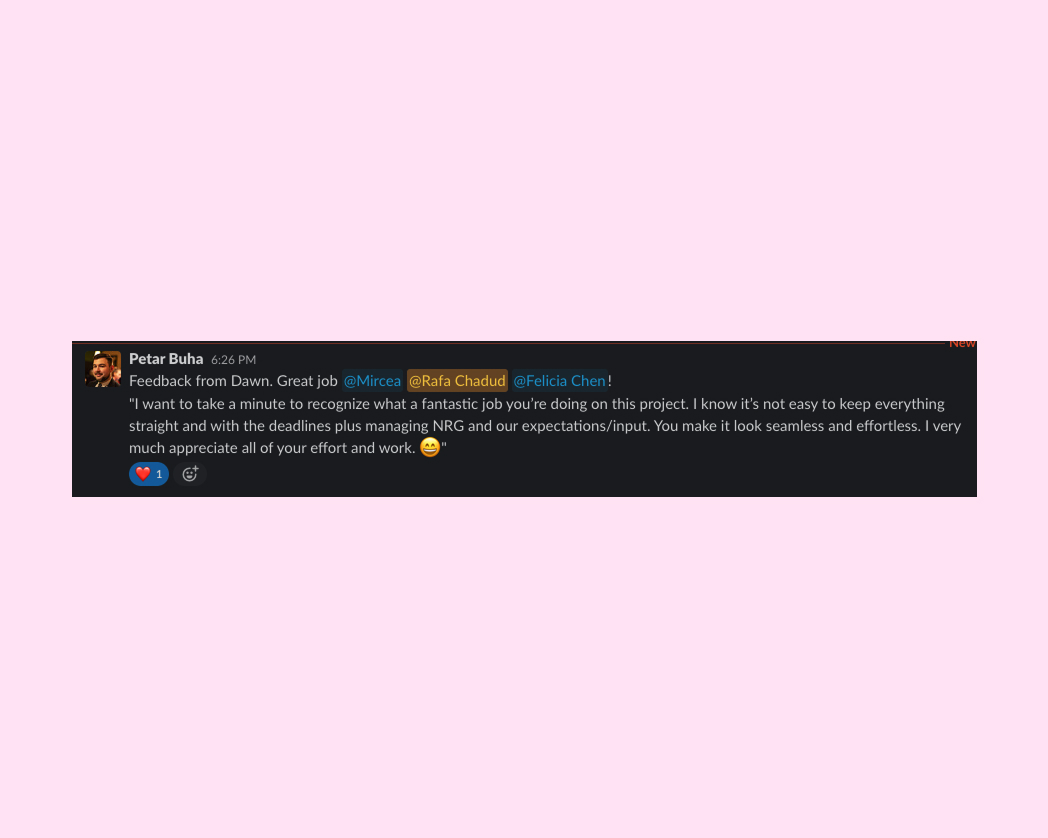
The discovery work was well received by the team and stakeholders.
Internal feedback recognized the quality of the work, the ability to manage expectations, and the effort required to keep the project aligned across multiple stakeholders, deadlines, and inputs.
The process also created a clearer path for decision making. Across the sprint, ideas were generated, prioritized, validated, and narrowed into stronger product opportunities for NRG.
Takeaways
This project showed how design can support innovation before a product is fully defined.
The biggest contribution was not only the creation of screens, but the structure brought to an ambiguous opportunity space.
Workshops, research, personas, journeys, prioritization frameworks, and prototypes were used to help the team move from broad business questions to clearer product concepts.
The collaboration with Business Analysts, Product Development, and senior NRG managers also expanded the project beyond UX execution, creating deeper exposure to product evaluation, opportunity sizing, strategic fit, and business model thinking.
The strongest outcome was a more confident product direction, supported by research, stakeholder alignment, and early product validation.